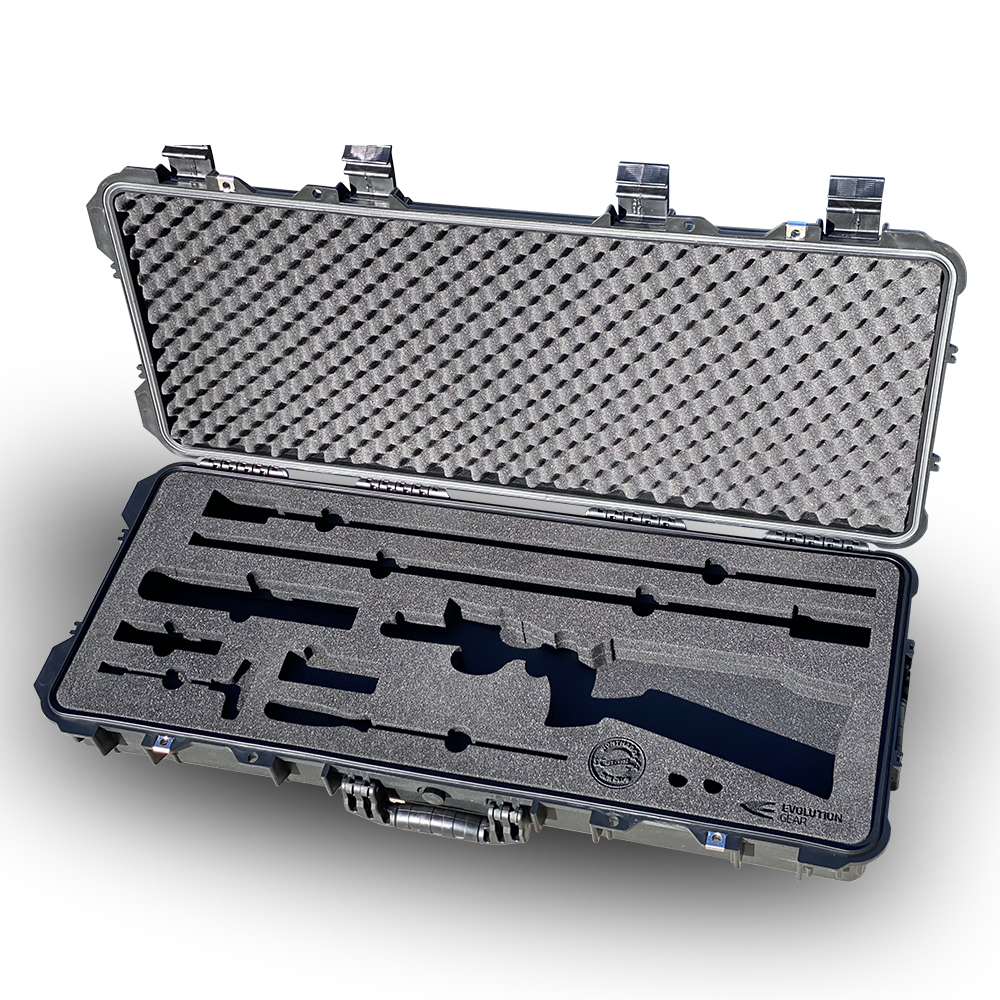
Custom foam is used in far more applications than many people realize. From product packaging and protective inserts to architectural models, furniture, signage, automotive components, and industrial insulation, foam plays an important role in projects that require precision and consistency. While foam may seem easy to cut with basic tools, achieving clean edges, exact dimensions, and repeatable results is often much more challenging than expected. That is why many businesses, designers, and manufacturers choose professional foam cutting services for their custom projects.
Professional foam cutting combines specialized equipment, technical expertise, and material knowledge to produce results that are difficult to achieve with manual cutting methods. Whether the project involves a single prototype or a large production run, working with experienced foam fabricators can improve quality, reduce waste, and save valuable time.
Precision That Manual Cutting Cannot Match
One of the biggest advantages of professional foam cutting is precision. Custom projects often require exact measurements so that foam components fit perfectly within packaging, furniture frames, equipment housings, or display structures. Even a small error can affect the performance or appearance of the final product.
Professional foam cutting services use advanced technologies such as CNC routing, hot wire cutting, laser cutting, and waterjet cutting, depending on the foam type and application. These machines are controlled by digital design files, allowing them to produce highly accurate cuts with minimal variation.
Manual cutting with knives, saws, or handheld tools can lead to uneven edges, inconsistent depths, and dimensional inaccuracies. These problems become more noticeable when multiple pieces must match exactly. Professional equipment ensures that every piece is cut to the same specification, which is especially important for commercial and industrial projects.
Cleaner Edges and a Better Finished Appearance
Appearance matters in many custom foam applications. Packaging inserts for premium products, trade show displays, furniture cushions, and decorative installations all benefit from smooth, clean edges. Rough or jagged cuts can make a project look unfinished and reduce its perceived quality.
Professional foam cutting methods are designed to minimize tearing, crushing, and surface damage. Hot wire cutting, for example, can create exceptionally smooth edges on certain foam materials, while CNC cutting produces sharp and consistent contours. The result is a cleaner finish that often requires little or no additional trimming.
For businesses presenting products to customers, the difference in appearance can be significant. A professionally cut foam insert not only protects the product but also enhances the overall unboxing and presentation experience.
Access to the Right Foam for the Job
Not all foam is the same. Different projects require different densities, firmness levels, cell structures, and performance characteristics. Using the wrong foam can lead to poor durability, inadequate protection, or an unsatisfactory feel.
Professional foam cutting companies typically work with a wide range of materials, including polyurethane foam, polyethylene foam, EVA foam, memory foam, acoustic foam, and high-density industrial foams. They can recommend the most suitable material based on the project’s requirements.
For example, a packaging insert for sensitive electronics may need a closed-cell foam with excellent shock absorption, while a furniture cushion may require a softer open-cell foam for comfort. Choosing the correct material is just as important as cutting it accurately, and professional guidance helps avoid costly mistakes.
Greater Design Flexibility
Custom projects often involve unique shapes, curves, cutouts, and layered components. Creating these designs manually can be difficult and time consuming. Professional foam cutting services can translate complex digital designs into precise physical parts.
Design flexibility is particularly valuable for:
- Product packaging with custom cavities
- Architectural and engineering models
- Signage and branding elements
- Automotive and marine components
- Medical and orthopedic supports
- Theater and film props
Because the cutting process is digitally controlled, intricate patterns and detailed contours can be reproduced accurately. This allows designers to focus on creativity without being limited by the capabilities of manual tools.
Consistency Across Multiple Pieces
Many custom projects require more than one foam component. A business may need hundreds of packaging inserts, a furniture manufacturer may need matching cushions, or an industrial company may require identical insulation parts.
Consistency is one of the areas where professional foam cutting delivers the greatest value. Once a design is programmed into the cutting system, the same specifications can be repeated across every piece. This level of uniformity is extremely difficult to achieve by hand.
Consistent parts improve assembly efficiency, reduce fitting problems, and maintain quality standards throughout the project. For companies that rely on repeat orders, professional foam cutting also ensures that future batches match the original production run.
Reduced Material Waste
Foam waste can become expensive, especially when using specialty or high-density materials. Inexperienced cutting often results in incorrect measurements, damaged pieces, and inefficient material usage.
Professional foam cutting services use optimized cutting layouts to maximize material yield. Computer software can arrange parts in a way that minimizes offcuts and reduces waste. Accurate cutting also means fewer rejected pieces.
Lower material waste has two important benefits: it reduces project costs and supports more sustainable manufacturing practices. Businesses looking to improve efficiency and environmental responsibility often find that professional fabrication helps achieve both goals.
Faster Turnaround Times
Time is a critical factor in many custom projects. Prototypes may be needed for client presentations, packaging inserts may be required before a product launch, or replacement components may be needed quickly to avoid production delays.
Although outsourcing may seem slower at first, professional foam cutting is often much faster than attempting to cut complex parts in-house. Specialized equipment can process foam rapidly, and experienced technicians know how to avoid common problems that cause delays.
Many professional fabricators can also handle design adjustments, material sourcing, cutting, and finishing within a single workflow, simplifying project management and reducing lead times.
Expertise in Complex Applications
Foam cutting is not only about shaping material. Certain applications require an understanding of compression, impact absorption, thermal performance, acoustic control, or long-term durability.
Professional foam specialists can provide valuable insight into how the foam will perform in real-world conditions. They may suggest changes to thickness, density, layering, or cut geometry to improve the final result.
This expertise is particularly important for technical applications such as:
- Protective packaging for fragile equipment
- Acoustic panels and soundproofing
- Medical positioning supports
- Automotive vibration control
- Industrial insulation systems
By considering performance as well as shape, professionals help ensure that the finished component functions as intended.
Cost Effectiveness in the Long Run
Some people choose DIY foam cutting to save money, but the total cost is often higher than expected. Material waste, rework, tool purchases, labor time, and inconsistent results can quickly add up.
Professional foam cutting services provide a more predictable cost structure. You pay for accurate parts that are ready to use, with fewer errors and less wasted material. For businesses, the savings in labor and reduced rework can outweigh the cost of outsourcing.
In addition, professionally fabricated foam components often last longer and perform better, reducing replacement and maintenance costs over time.
Conclusion
Custom foam projects demand more than simply cutting a piece of material to size. Precision, consistency, material selection, and finishing quality all influence the success of the final product. Professional foam cutting services bring together advanced equipment, technical knowledge, and production expertise to deliver results that are difficult to achieve with manual methods.
Whether the goal is premium packaging, custom furniture, industrial components, acoustic treatment, or creative design work, professional fabrication offers clear advantages. Cleaner cuts, better fit, reduced waste, faster turnaround, and reliable repeatability all contribute to a higher quality outcome.
For anyone investing time and resources into a custom project, choosing professional foam cutting is not just about convenience. It is a practical decision that helps ensure the finished product looks better, performs better, and delivers greater value in the long run.