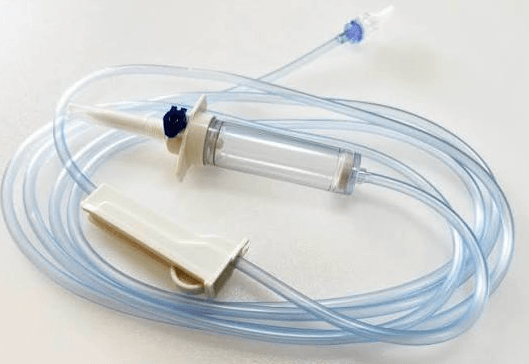
One overlooked factor in choosing among types of IV infusion sets is the viscosity of the fluid being administered. Thicker fluids behave very differently from standard saline, and equipment choice should reflect that.
Why Viscosity Changes Equipment Needs
Thicker fluids, such as certain nutritional formulas or blood products, flow more slowly through standard tubing, which can require wider-bore sets to maintain a clinically appropriate rate.
Standard Crystalloid Fluids
Common IV fluids like normal saline or lactated Ringer’s flow easily through standard tubing without any special accommodation.
Blood and Blood Products
Blood administration sets use wider tubing and in-line filters specifically because whole blood and packed cells are thicker and contain particulate matter that thinner tubing would struggle to pass efficiently.
See also: The Ultimate Guide to Scaling a Small Business
Parenteral Nutrition Considerations
Total parenteral nutrition formulas can be notably viscous, and sets used for TPN often need to account for this to avoid unnecessarily slow or interrupted delivery.
Additional Resource
A broader look at types of iv infusion sets includes viscosity-related considerations alongside the more commonly discussed factors like flow control and access points.
Frequently Asked Questions
Does viscosity affect drop factor accuracy?
Yes, thicker fluids can behave differently than the drop factor was calibrated for, so blood and specialty formulas typically use dedicated set designs.
Can standard tubing be used for parenteral nutrition?
It’s generally better to use tubing designed for the formula’s viscosity to maintain reliable, uninterrupted delivery.
Why do blood sets look different from standard sets?
Wider tubing and an in-line filter accommodate blood’s thickness and remove any small clots or debris before it reaches the patient.
Conclusion
Fluid viscosity is an easy factor to overlook when selecting an IV infusion set, but it has a real, practical effect on flow accuracy and delivery speed. Accounting for it upfront prevents frustrating slow-flow problems partway through an infusion.